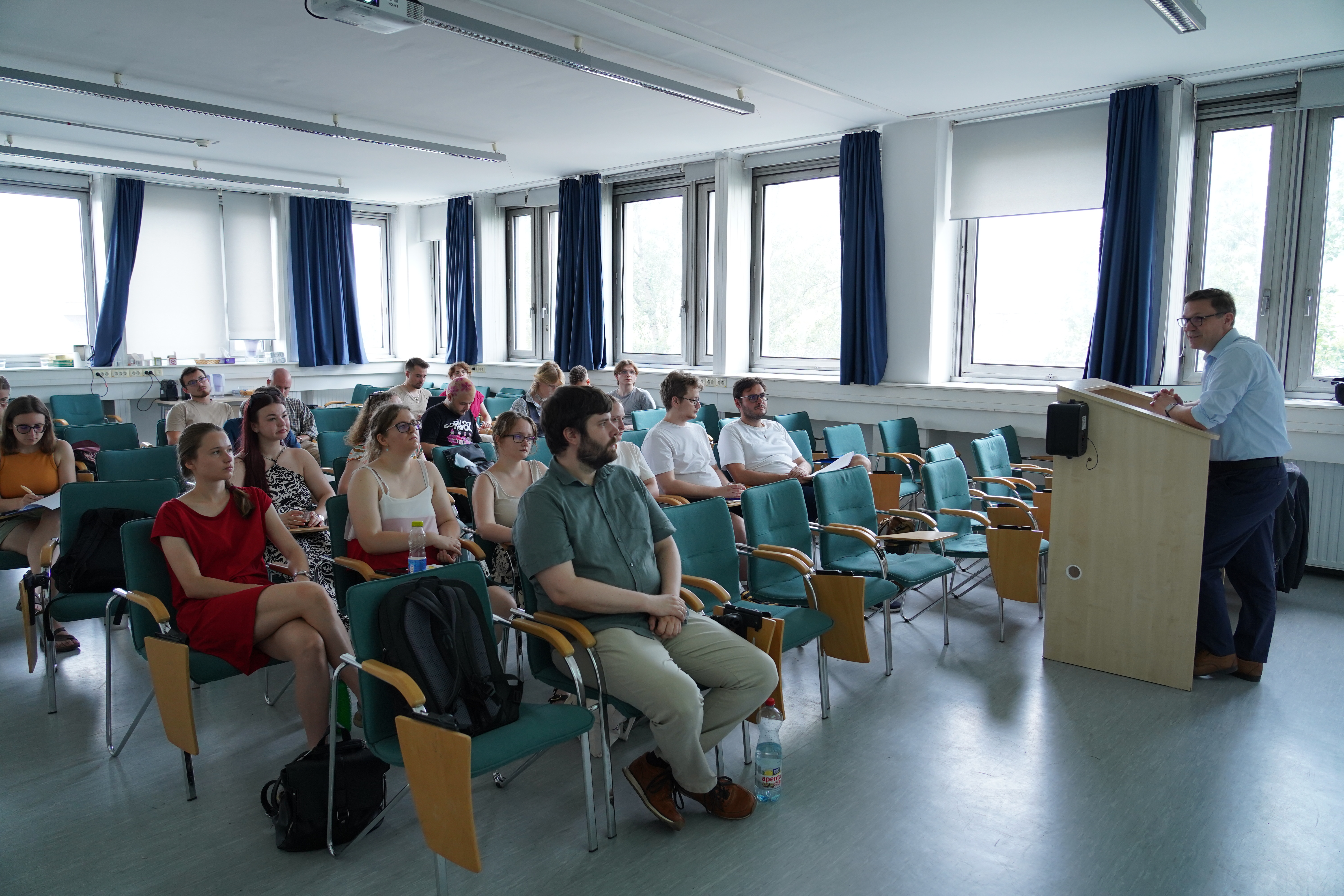
Entitled Central Europe and the Habsburgs – Cultural Memory and Heritage of the Habsburg Monarchy, the programme was organised within the framework of the Erasmus+ Blended Intensive Programme (BIP).
For nearly four centuries, numerous ethnic, linguistic and religious communities coexisted in the Central European lands ruled by the Habsburgs. For a long time, the historiography of the states that emerged or underwent transformation following the dissolution of the Austro-Hungarian Monarchy interpreted the ethnic and religious relations of this period primarily within national frameworks, devoting considerable attention to the conflicts that placed a strain on coexistence. In recent decades, however, historical research has increasingly focused on the different forms of coexistence, interactions between communities and processes of cultural transfer.
The summer university aimed to provide students with an opportunity to expand both their theoretical and practical knowledge of how the memory of the Habsburg dynasty and its empire influenced the identities of the peoples of Central Europe; which shared points of remembrance exist and how their interpretation has changed in the modern era; and what cultural and architectural legacy this centuries-long period left behind.
The programme was organised through a partnership between the Institute of History at Pázmány’s Faculty of Humanities and Social Sciences, Matej Bel University in Banská Bystrica, Jagiellonian University in Kraków and Babeș–Bolyai University in Cluj-Napoca, with the participation of students and visiting lecturers in history and art history.
The lectures and seminars held on the first day established the programme’s methodological and interpretative framework. Zsolt Kovács of Babeș–Bolyai University presented Transylvania’s Baroque architectural heritage associated with the Habsburgs. His lecture examined buildings and decorative motifs intended to represent royal authority, as well as fortress and church architecture, their influence on the overall appearance and subsequent development of Transylvanian cities such as Alba Iulia and Cluj-Napoca, and their role in the region’s cultural heritage.
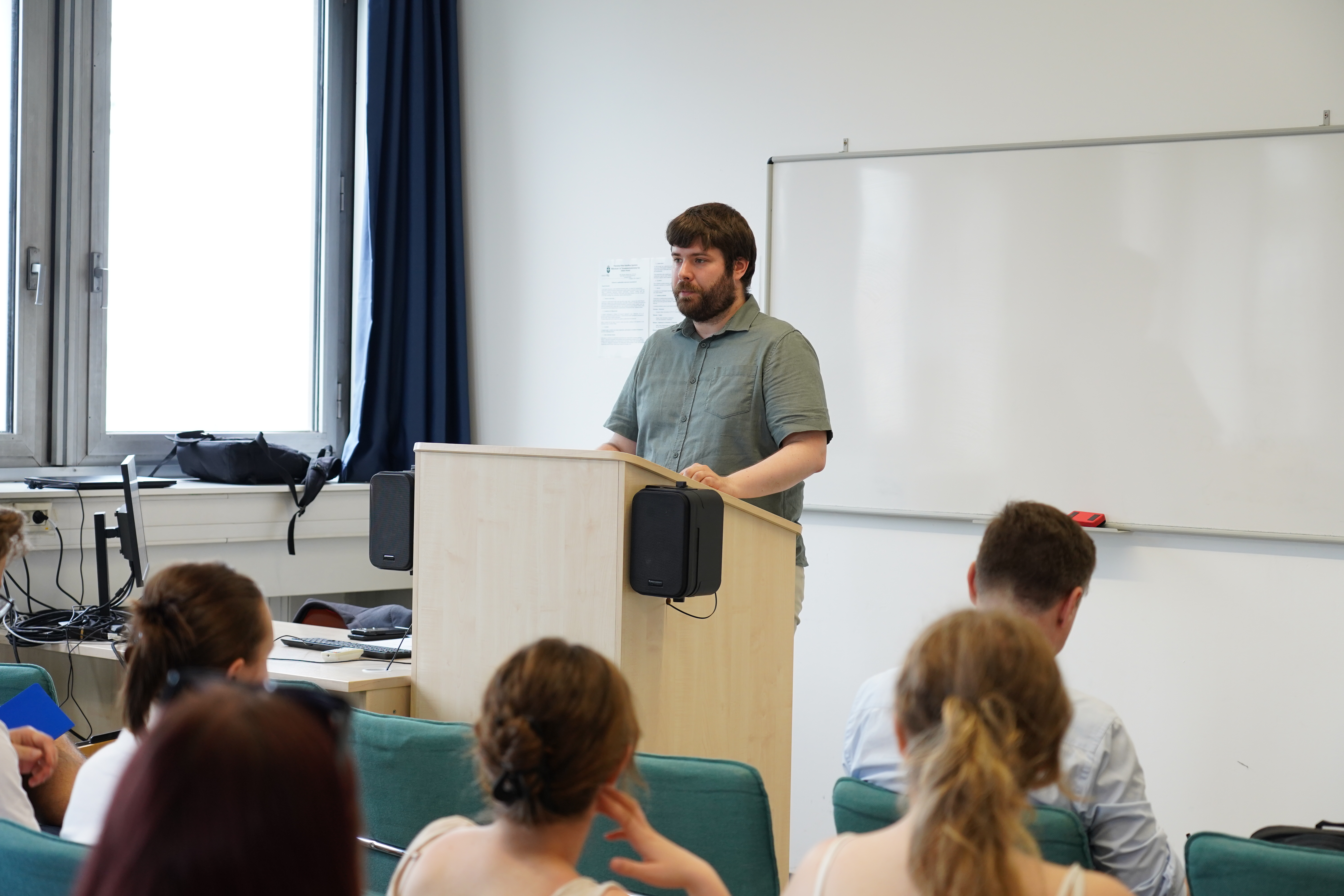
In a seminar, Kristóf Szuromi, Assistant Professor at the Institute of History of Pázmány’s Faculty of Humanities and Social Sciences, introduced the students to the concept of lieux de mémoire, or sites of memory, as defined by Pierre Nora, including its principal types and possible interpretations. Through group work, the students applied this concept to sites of memory in Hungary and Central Europe, analysing their history, possible changes in their meaning, and their importance in shaping or preserving identities.
The day’s lecture on research methodology was delivered by Matej Smida, a doctoral student at Matej Bel University. He discussed the digitisation of archival sources and ways of making them accessible, as well as the role, accuracy and possible applications of artificial intelligence-based software already used, or potentially applicable, in historical research.
During the first main session of the second day, the students took centre stage in the opening part of a colloquium consisting of short presentations related to the theme of the summer university, followed by a joint discussion. In the afternoon, the group visited the Hungarian National Gallery, where they viewed the Palatinal Crypt, the burial place of the Hungarian branch of the House of Habsburg-Lorraine.
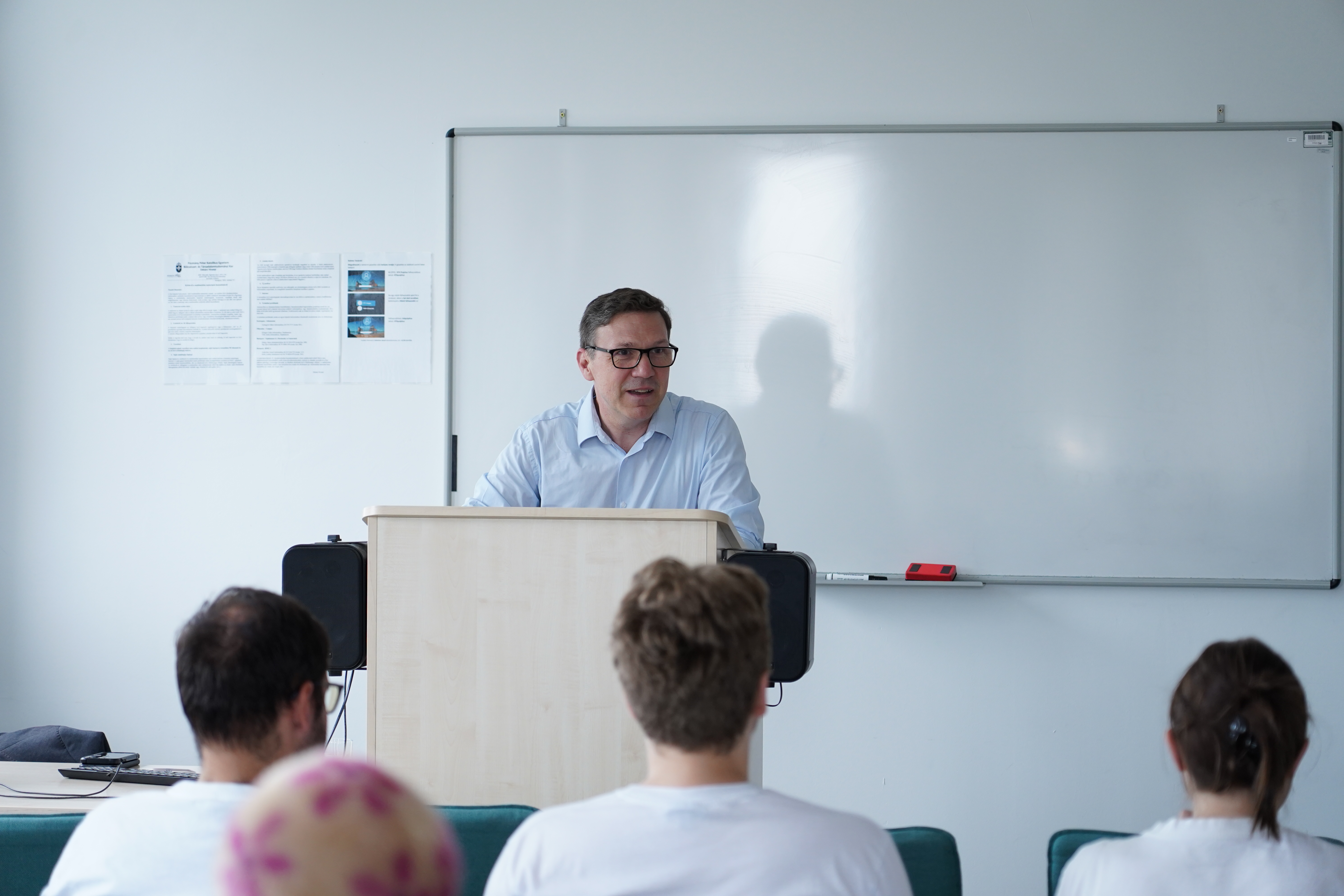
On 1 July, Gergely Fejérdy, Assistant Professor at the Institute of History of Pázmány’s Faculty of Humanities and Social Sciences and Deputy Director of the Otto von Habsburg Foundation, delivered a lecture entitled Otto von Habsburg: The Life of a Crown Prince in the Service of Central Europe. The students learned about Otto von Habsburg’s family background and career, while the lecture vividly demonstrated how the former heir to the Hungarian throne became, during the second half of the twentieth century, a prominent European politician deeply committed to the cause of Central Europe and its peoples. The lecture was followed by a lively discussion about Otto von Habsburg, the activities of the Foundation, and the sources held there that are available for research.
The following day, participants took part in a study trip to Komárom. During the excursion, the students learned about the construction history of the Komárom fortress system, as well as the distinctive features, role and significance of Fort Monostor, gaining first-hand insight into nineteenth-century fortress architecture in the Habsburg Monarchy.
In addition to an overview of its history, the students gained detailed knowledge of the fortress as both a surviving element of the Monarchy’s architectural heritage and a site of memory. They examined how the complex came to hold significance for the present-day city of Komárom, for the history of the Hungarian military in the nineteenth and twentieth centuries, and for the soldiers who served there. They also considered how the site may be interpreted as a shared place of cultural memory for Komárom and Komárno, situated on the Slovak bank of the Danube. Finally, they explored how a fortress constructed between the 1850s and the 1870s could serve as a local site of remembrance for the battles fought at Komárom during the Hungarian Revolution and War of Independence of 1848–1849.
The study trip was closely connected to one of the summer university’s central themes: the architectural heritage and cultural memory of the Habsburg Monarchy in Central Europe.
The final day of the summer university was devoted entirely to the colloquium centred on student presentations. The event gave Hungarian, Romanian, Slovak and Polish students the opportunity to present research related either to their theses or to the programme’s central themes. They were therefore able to discuss their work in an international setting from both academic and methodological perspectives, contributing to the effectiveness of their future research.
The presentations also clearly demonstrated the wide range of research opportunities associated with the summer university’s main theme. Participants encountered studies relating to the history of memory, cultural and everyday life, art history, military history and intellectual history.
At the closing of the programme, the organisers and contributors agreed that the summer university had laid the foundations for several future collaborative projects, and they committed themselves to continuing the initiative in the near future.