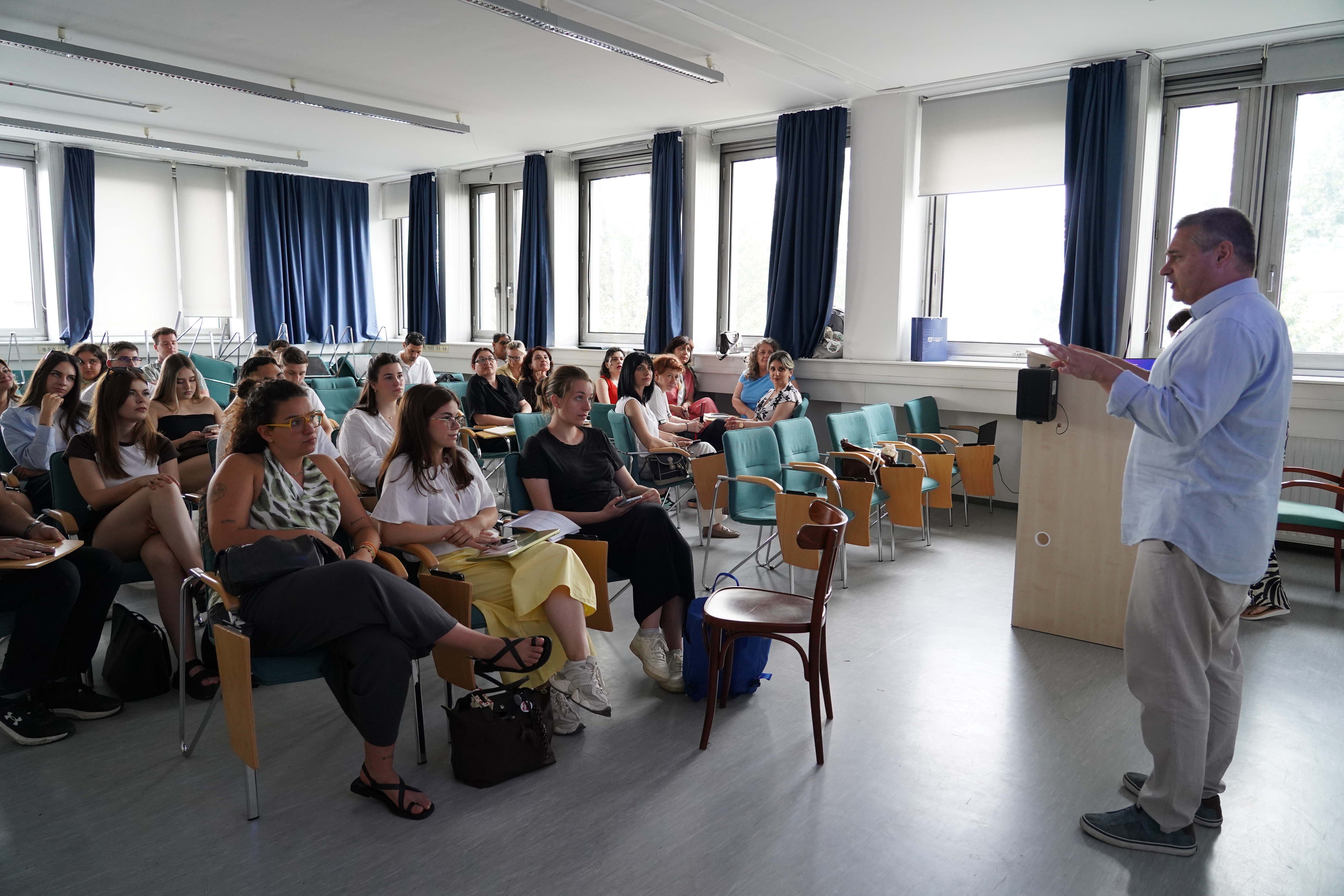
The programme focused on one of the most pressing questions facing higher education today: how artificial intelligence, and generative AI in particular, is transforming university learning, research, teaching and students’ everyday lives.
The programme was open to bachelor’s, master’s and doctoral students, irrespective of their field of study. A good command of English was a prerequisite for participation, as the entire programme was conducted in English. The students came from four countries: Slovakia, Slovenia, Spain and France. This geographical diversity shaped the programme from the outset: the discussion of artificial intelligence was approached not from the perspective of a single country, institution or academic discipline, but at the intersection of different higher education cultures and learning experiences.
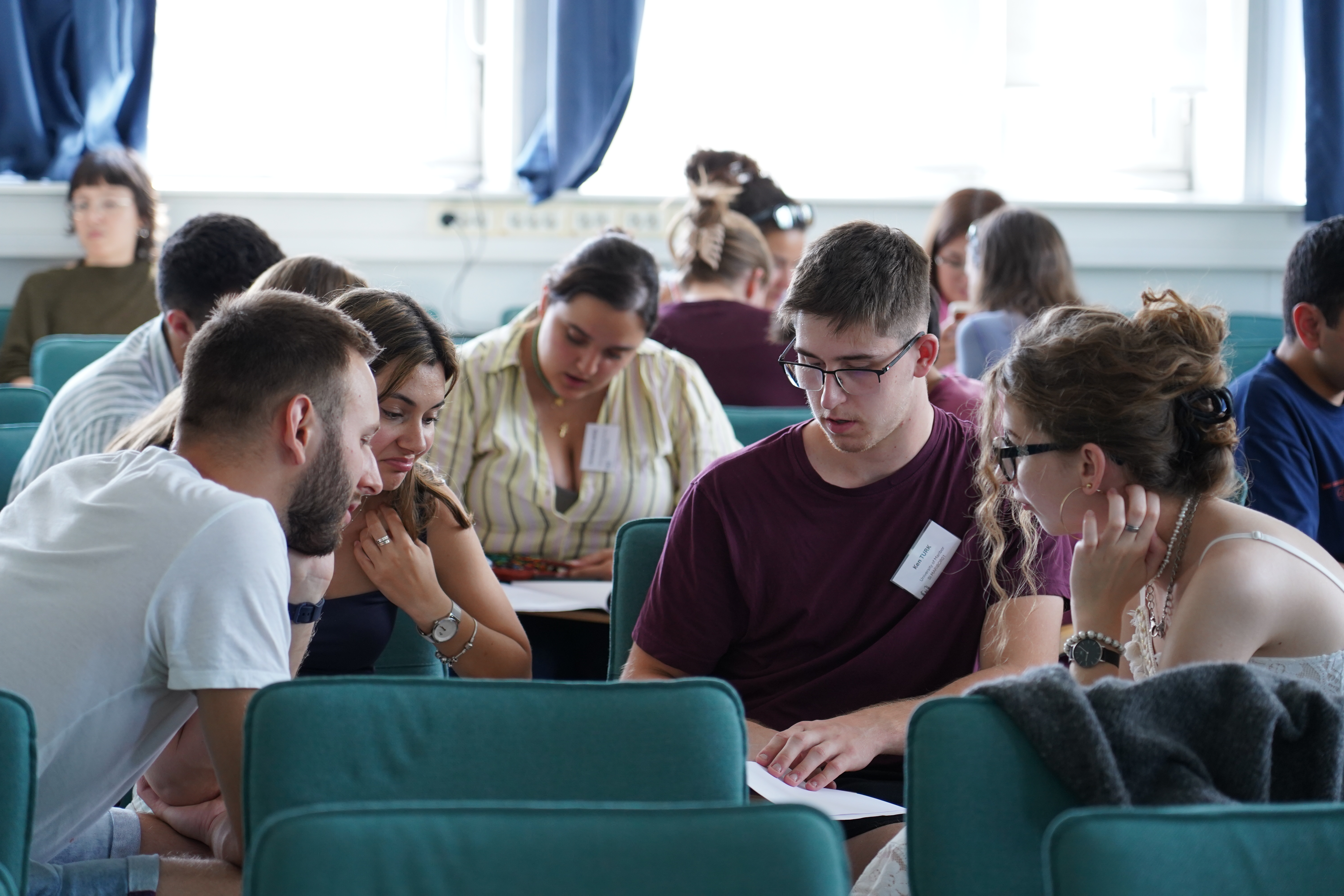
The programme did not begin with the assumption that AI is simply a new tool that students must learn to use as efficiently as possible. Instead, it explored how generative artificial intelligence could be integrated into higher education in a way that genuinely serves educational objectives, supports students’ development and reflects the values of university communities. Rather than encouraging the passive use of technology, the course placed an active, design-oriented approach at its centre. Participants examined how AI-based solutions could be conceived and developed to meaningfully improve student life and support learning while remaining acceptable from ethical, pedagogical and social perspectives.
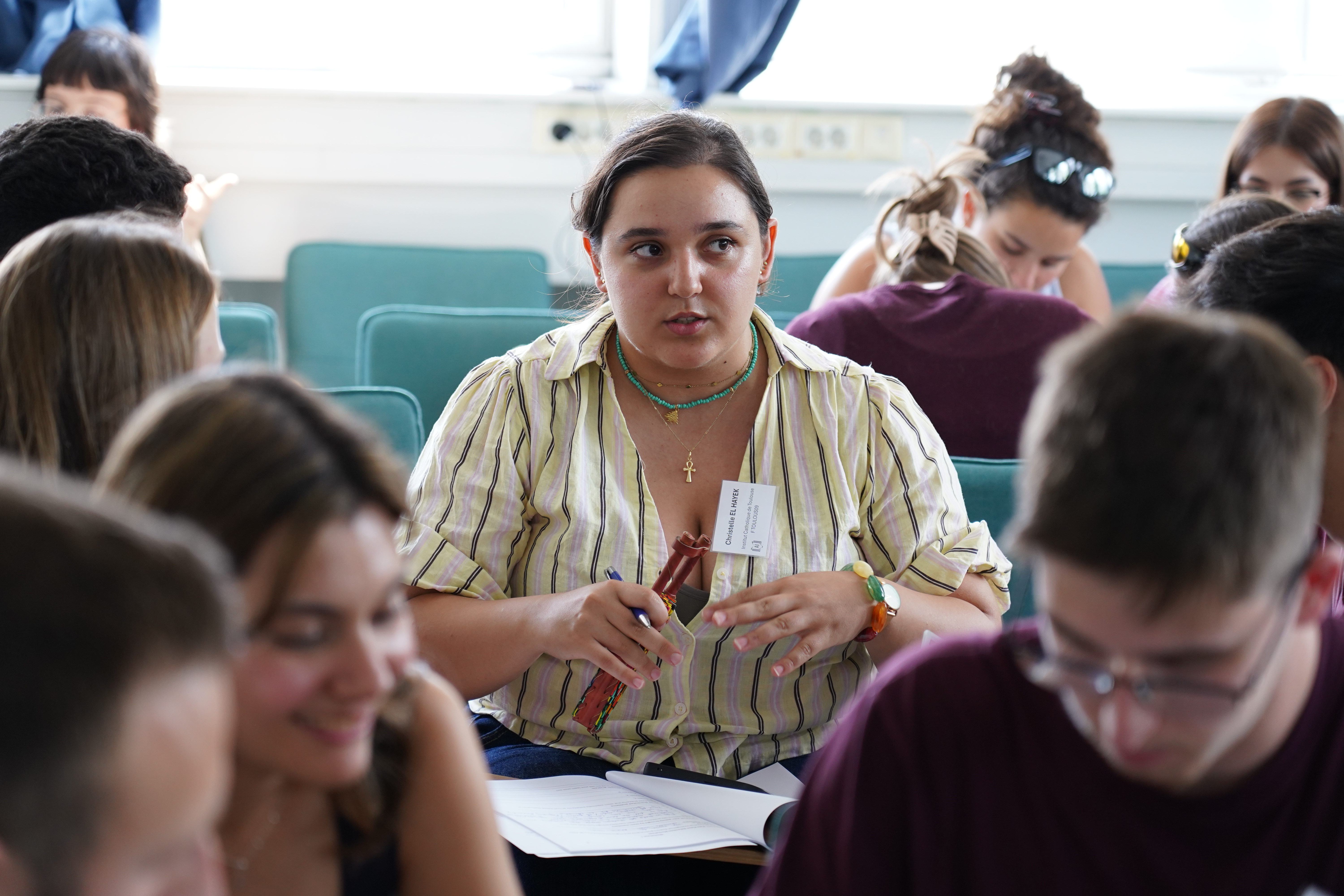
The summer university consisted of two interconnected components. The first was an online preparatory session held on 6 May. This virtual component introduced participants to the aims, topics and working methods of the course. Students became familiar with the structure of the programme, the main stages of the week in Budapest, the principles of collaborative project work and the expectations that would guide their subsequent on-site activities. During the online session, the students were also given an assignment: before the Budapest meeting, they were asked to keep a “pain point journal” documenting the problems they encountered in their everyday university lives that might be addressed through a generative AI application.
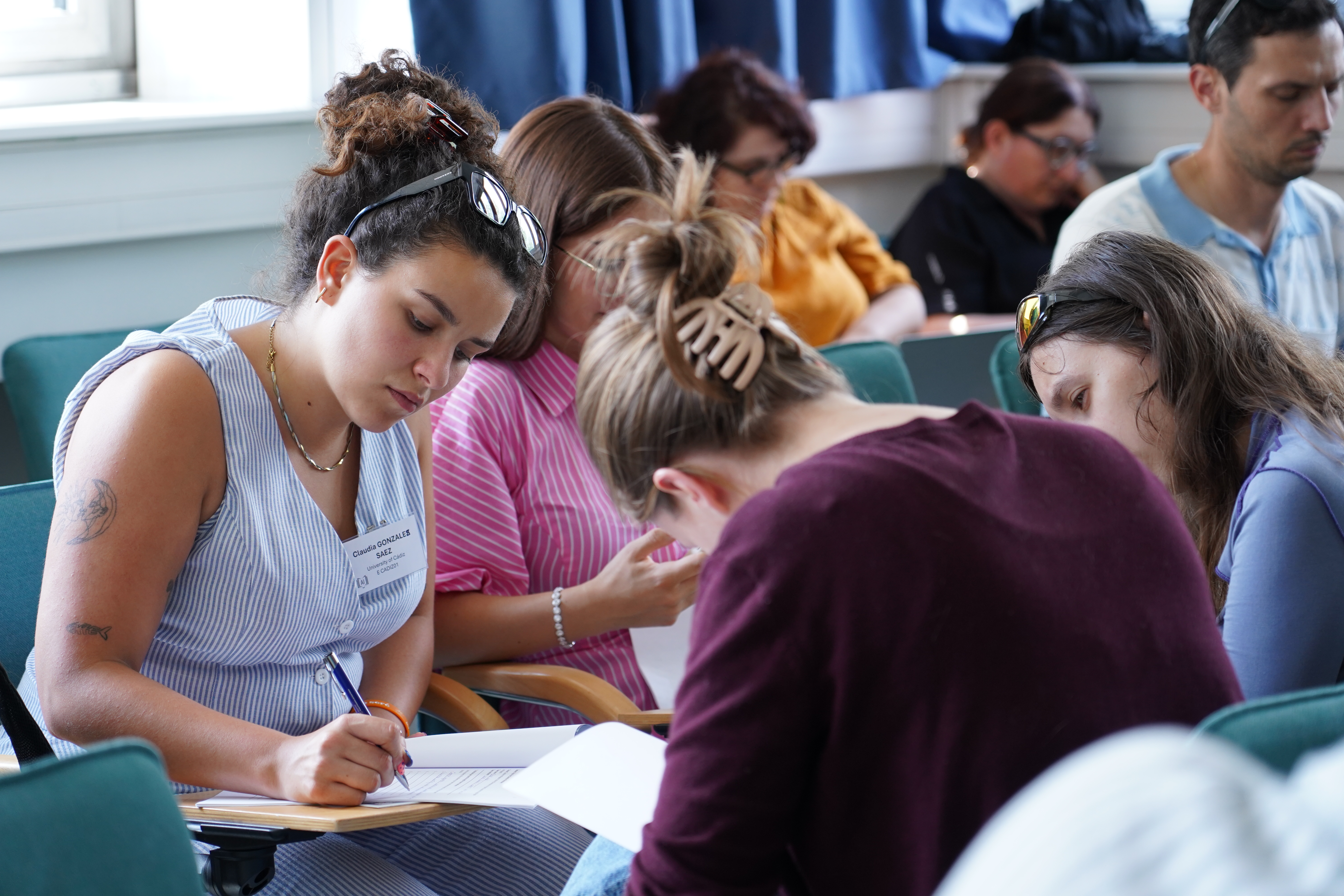
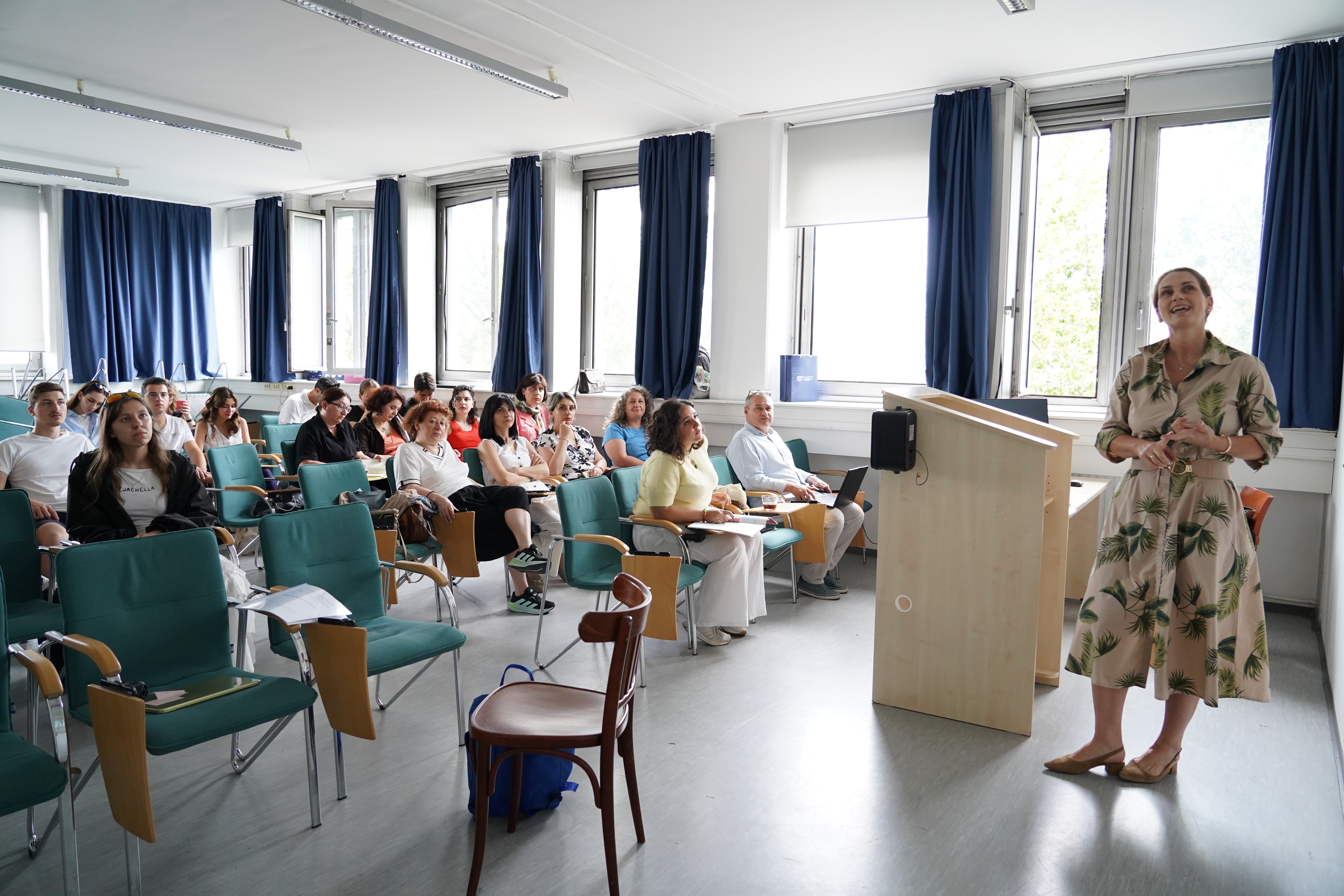
The second, on-site component took place at Pázmány Péter Catholic University between 6 and 12 July in an intensive, in-person format. During the week, nine lectures and workshops helped the students develop their own ideas for generative AI applications. The students worked in small, international groups. This format proved particularly valuable because the social and educational challenges associated with artificial intelligence can rarely be addressed from the perspective of a single discipline or cultural background. The programme therefore placed deliberate emphasis on international and interdisciplinary cooperation.
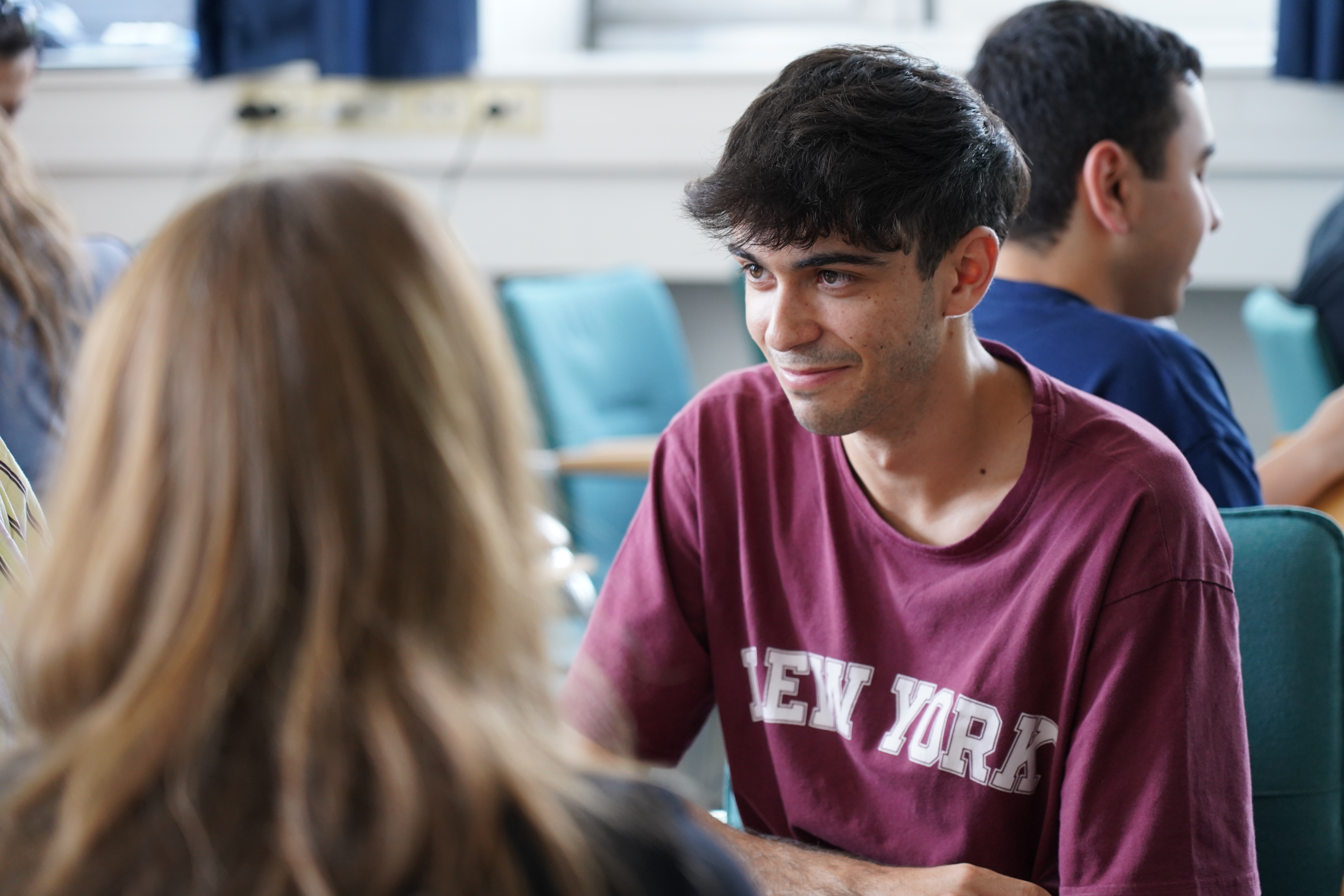
Participants arrived with different academic backgrounds, experiences and questions, and worked together to formulate AI-based applications that responded to the genuine needs of higher education. Their group work generated not only technological ideas but also debates about the meaning of responsible innovation, the qualities that make an application genuinely useful, and the point at which a digital solution may become ethically or even legally problematic.
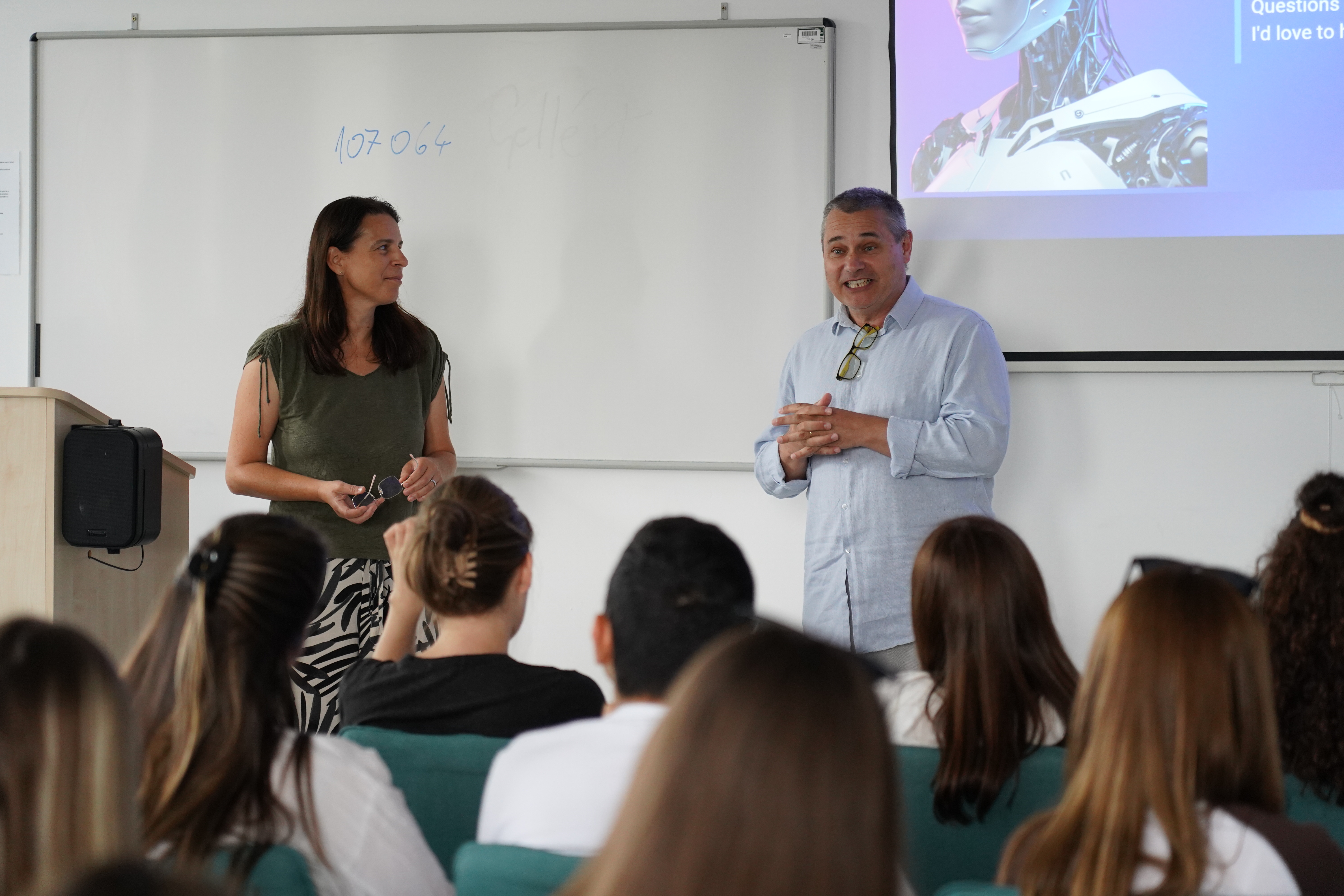
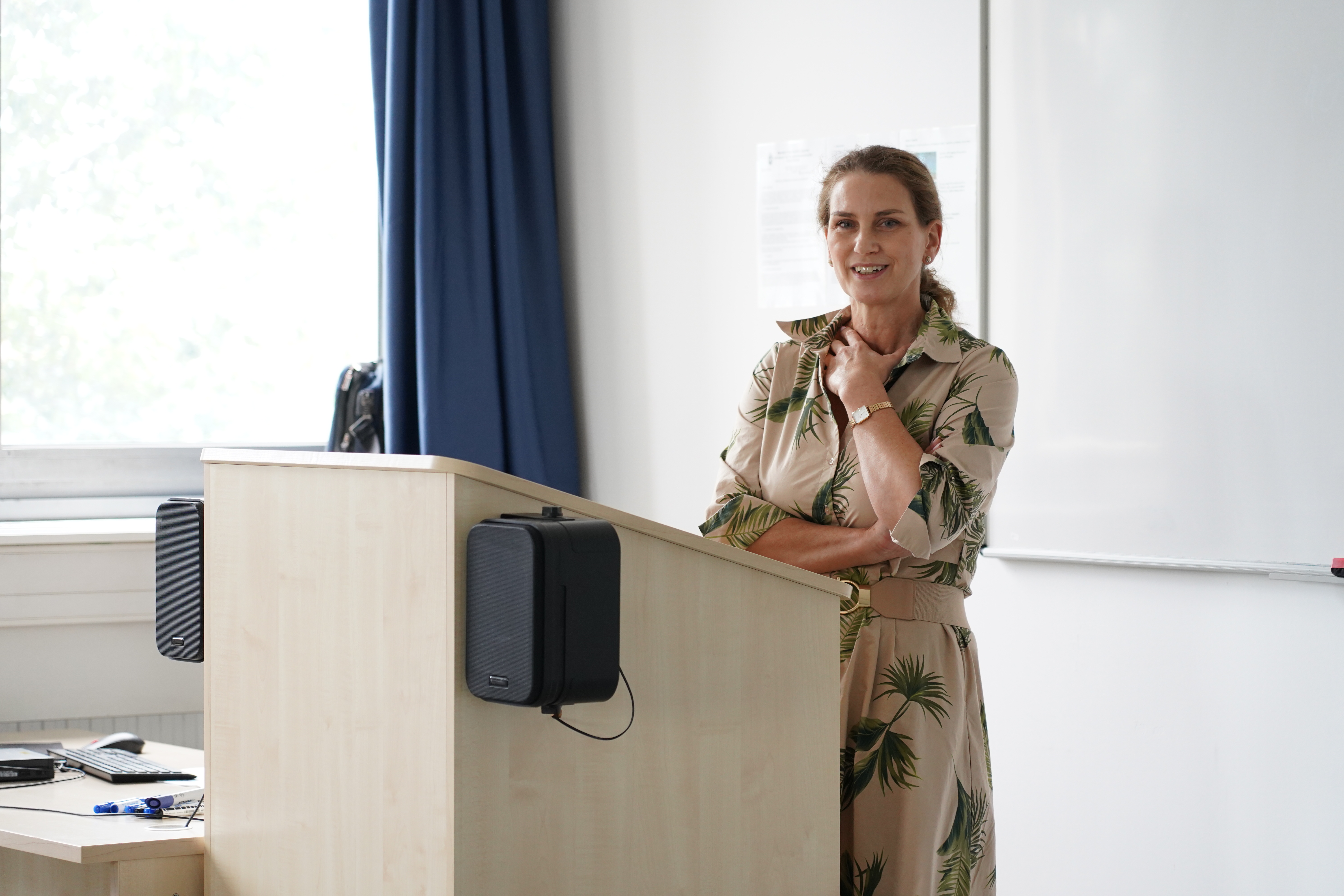
One distinctive feature of the summer university was that its lectures and workshops were delivered by experts from different countries and academic disciplines. Alongside scholars, the programme also involved successful entrepreneurs, who contributed valuable perspectives from the fields of technological development, innovation and practical implementation. This combination proved particularly fruitful, as academic reflection and critical thinking entered into dialogue with an entrepreneurial perspective. Students therefore learned both how to discuss generative AI critically and how an idea could be developed into an application or service.
The course was strongly creative and challenge-based. Rather than being presented with ready-made solutions or a predefined problem, the students first had to identify and formulate a problem themselves and then develop a generative AI-based solution to address it. They began by considering the challenges faced by university students today. How can AI support the organisation of learning, note-taking, research, time management, multilingual communication or integration into university communities? Where should the line be drawn between assistance and substitution? How can AI tools be designed to strengthen rather than weaken independent thinking?
These questions are particularly timely in higher education. The rapid spread of AI tools has caught many lecturers and institutions unprepared. Some regard them primarily as a threat, while others see them as tools for increasing efficiency. The summer university at Pázmány sought a more nuanced position between these two extremes. It neither idealised the technology nor rejected it. Its starting point was that generative AI is already present in university life; therefore, the most important task is neither prohibition nor uncritical enthusiasm, but responsible interpretation, conscious use and critical design.
The central message of the Pázmány summer university can perhaps be summarised as follows: artificial intelligence is not merely an information technology issue, but also an educational, cultural, ethical and social concern. Higher education must do more than simply respond to technological change; it must also play an active role in shaping it. This requires students, lecturers, researchers and professional partners who are capable of thinking both critically and creatively.
The programme embodied this approach. Rather than offering ready-made answers, it invited—and continues to invite—responsible questioning, collaborative design and international cooperation.
The course description is available here, while the detailed programme can be found here.