
Interactions with others are an essential part of our lives, but a conversation doesn’t always run in the expected way. We all have, more or less, the experience of unexpected, misleading or even unpleasant communication. Such experience is not desirable, but unfortunately, we might all have caused some, though we might not be aware of it or willing to admit it.
Paul Dirac is the Nobel Prize Winner in physics in 1933. The following record is one of his personal stories documented in the book, The Strangest Man: The hidden life of Paul Dirac by Graham Farmelo. The story might be considered as an example of an unexpected, unpleasant, and somehow amusing interaction.
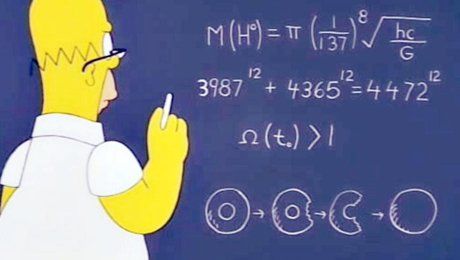
The story begins during one of Dirac’s lectures, moments after he has finished talking, when the moderator asks if anyone has any questions. Someone in the audience says, ‘I don’t understand the equation on the top-right-hand corner of the blackboard.’ Dirac says nothing. The audience shuffles nervously, but he remains silent, whiling away the time of day, looking unconcerned. The moderator, feeling obliged to break the silence, asks for a reply, whereupon Dirac says, ‘That was not a question, it was a comment.’
(Farmelo, 2009, pp. 161-2)
After a public lecture, opening the floor for questions is regarded as a conventional practice. The lecturer is then expected to answer the questions raised by the audience. In the story above, the moderator was following this convention and asked the audience for questions. However, some uneasiness was aroused by Dirac’s silence. As he did not react to the audience, the moderator then formulated a direct request by asking Dirac for a reply. Consequently, Dirac did reply to this request by telling the reason why he did not react to the audience’s statement in the first place—he did not see the statement from the audience as a question that needed to be answered.
After reading the story, which emotions would arise in you concerning Dirac? Some people might believe that Dirac is an arrogant person because he deliberately ignored the question raised by the audience or even made jokes about the person who did not understand his theory. In turn, some could laugh at him because he was too dumb to make normal communication as he was not able to understand the question raised by the audience. It is clear that the unexpected communicative experience might cause suspicion, bring about unpleasant feelings, generate misunderstanding, and even damage the interpersonal relationship among the parties.
 Every piece of interaction has some unique scenario, but there could be some kind of pattern behind the problems in these impromptu everyday affairs. If we could have better knowledge of the patterns, we might be able to avoid some potential problems and have more agreeable communication in life. To find a hidden pattern, we need to find out what the problem is in the interaction and what causes it. In the above example, in the first place, there was a missing reply from Dirac. This missing piece of information triggered suspicion by the audience. Dirac believed the utterance made by the audience only commented on his lecture but did not call for an answer, so, for Dirac, there was no need to reply. Thus, there seems to be a disparity between what is called for and what is perceived to be in the interaction.
I learnt Dirac’s story at the guest lecture by Dr Éva Illés in the course on applied linguistics taught by Dr Andrea Reményi at the doctoral school of linguistics at Pázmány. The story was introduced to demonstrate the distinction between direct and indirect speech acts. Speech acts are the performative utterances according to J. L. Austin, and a request is one of the most important speech acts. People can perform the speech act of request by asking a question. However, a request is considered a face-threatening act. According to Brown and Levinson, a face-threatening act is in opposition to the wants and desires of the other interactant. Therefore, while making a request, people tend to utter it indirectly to avoid the negative effects on the party who is requested. Making the narrative utterance of the reason for making a request instead of asking directly is one of the indirect ways. In the story the narrative statement “I don’t understand the equation on the top-right-hand corner of the blackboard” is the ground establishing an indirectly request for an explication from Dirac about this scientific problem.
The analysis of the request shows some pretext for Dirac’s inaction. An indirect request is not understood by Dirac because it is not in accordance with the form of a direct one. But unlike Dirac, the audience and the moderator in the example seem to have all understood the indirect way of making the request. Farmelo, the author of the book in which this story appears, portrays Paul Dirac as someone extremely insensitive in communication. If Dirac’s reaction in the interaction is considered alternative, the example might only be an illustration of the indirect realisation of the speech act of request, but not enough to account for the problems that occur in everyday interactions.
For research in pragmatics, problems in verbal interaction are of interest because a discursive problem usually makes the hidden interactional pattern salient. No matter whether Dirac is seen as an arrogant person or a dull one, the problem behind the interaction originates in the piece of the missing explanation. There is an abundance of studies on the truth conditions of explanations in the philosophy of science, which Dirac is asked to provide in the interaction according to the request by the audience.Anexplanation is associated with some type of account or clarification. But what makes the account or clarification effective in the interaction can be something different from the explanation itself. The audience’s utterance is an explanation for a request to Dirac, a request that is not understood and not fulfilled by Dirac. The missing explanation from Dirac can also be looked into from different perspectives. On the one hand, the content of the missing explanation should be a scientific one that encompasses the scientific logics and conditions in Dirac’s lecture. On the other hand, the presentation of this piece of scientific explanation can also fulfil the calling for certain information in the interaction. This calling is entitled by the convention of the question floor after a public lecture. Similarly, the mismatch between the calling and the presentation of certain explanations could be the key issue in a problematic interaction.
 Given the important role played by explanation in interaction, I propose, in my dissertation work, a pragmatic conceptualisation of interactional explanation. An interactional explanation can be any informative message, or its absence, in interaction. Although interactional explanations are often causal, they are not limited to causal ones: as the interactants make different choices for the informative message conveyed by interactional explanations, a piece of interactional explanation can encompass diverse informative messages. Taking an example in a situation of being late at a meeting, we might answer a simple “why are you late?” question in very different ways depending on various circumstances. We might tell directly to a friend that we forgot the meeting but formulate something like a traffic jam as an excuse to a colleague. We might even generate an apology to our boss without really explaining the reason for being late. These choices are determined by many factors, including the interpersonal relationships between the interactants, purposes of the interaction, conventions associated with a certain situation in a linguaculture, and some specific interactional rituals among the participants, etc. Contrastive pragmatic research focuses on variabilities in the application of linguistic resources in interactions across different linguacultures. Interactional explanation research with a contrastive emphasis can help us pin down the complex problems in interactions, especially in intercultural ones.
Interactional explanation is a fascinating discursive phenomenon, as the seemingly simple informative messages (or their absence, as in Dirac’s case) usually communicate more than the messages themselves and bring about different perceptions and consequences. A better knowledge of interactional explanations can facilitate the understanding of the dynamics of our everyday interactions and promote a more peaceful and delightful social life.