The first working week focused on getting to know each other and defining what we will be doing in the next year. The team of ten people (five each from Radboud University and PPCU) turned out to be quite mixed as far as our academic background is considered, which will be of great use.
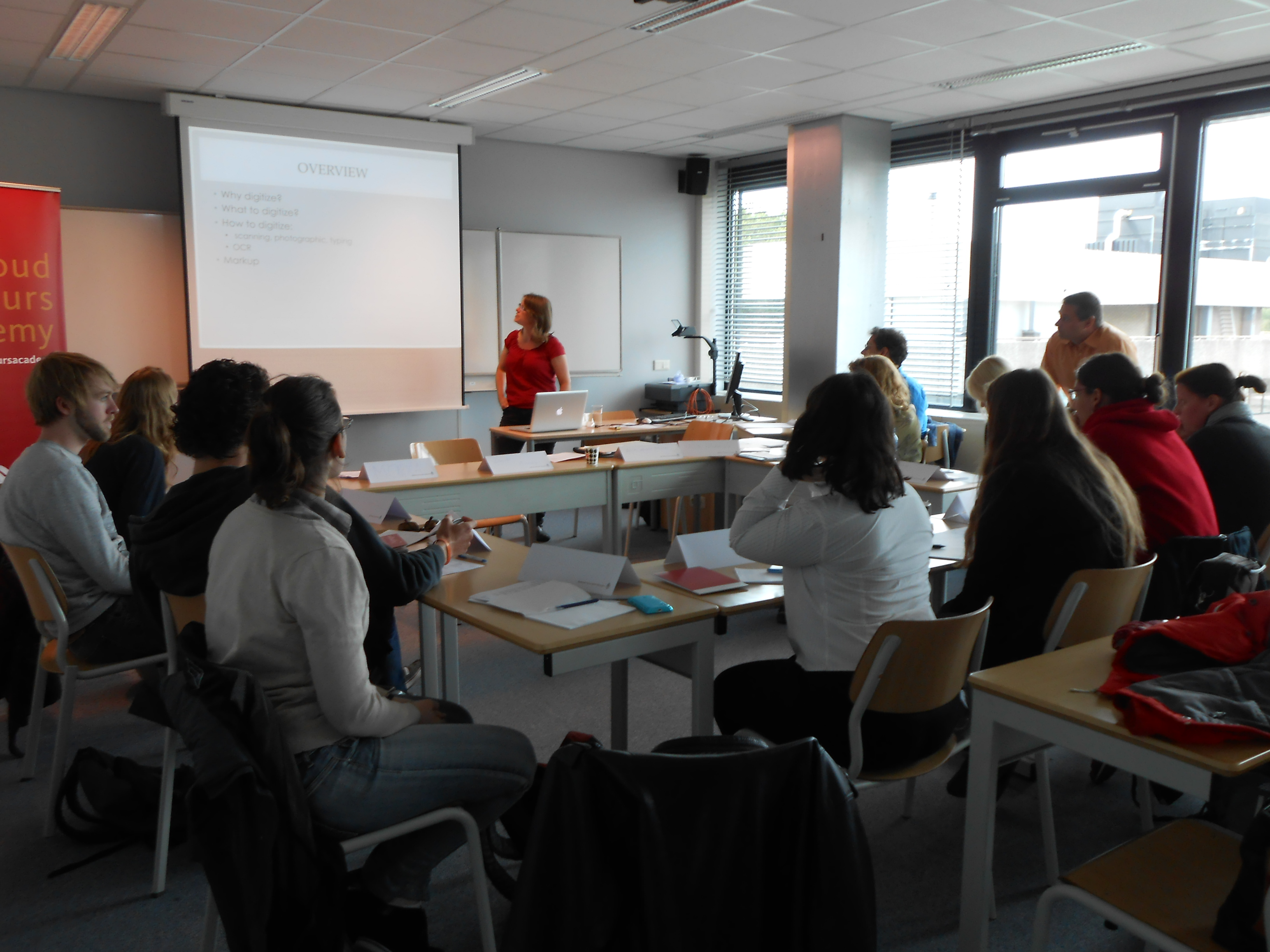
On Monday we had an interesting lecture with Antal van den Bosch and Iris Hendrickx. The title was "Introduction on digital cultural heritage and digitizing documents". First, Antal talked about the importance and use of digital cultural heritage, and then Iris about digitization of written historical sources. The latter was rather focused on the process and technical side of digitization.
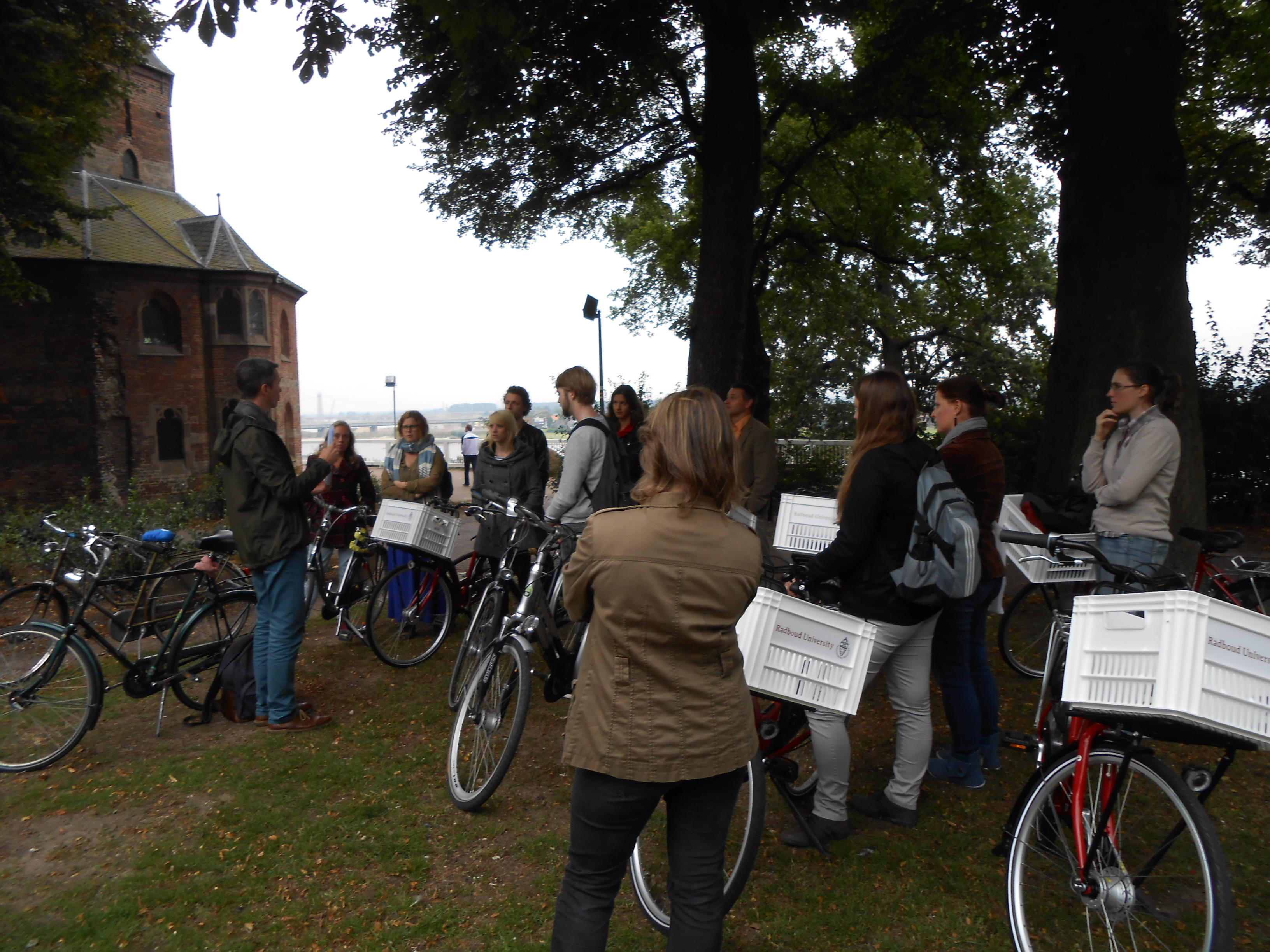
For Monday afternoon, our supervisor Zsolt Almási, began with an enjoyable and enlightening seminar about philosophy of history, and the objectiveness of history. We realised how difficult if not impossible it is to communicate history to others objectively. Later in the afternoon the whole group went on a sightseeing tour on bikes with a former professor of PPCU, László Munteán. The tour was unique in that our knowledge of WWII events and city highlights was expanded past that of the typical tourist. I sincerely believe none of us had any objections to this kind of perspective.
On Tuesday the group met the programme's client, the representative of CVCE, Marten Düring. He talked to us about what the task would be: develop a conceptual model for a user friendly enhanced publication (ePublication). Marten also explored the difference between data, information and knowledge. In the afternoon we went to the Airborne museum in Oosterbeek.
Wednesday morning we started working on the definition of enhanced publications. We spent the rest of the day visiting the Liberation Museum in Groesbeek.
Thursday was the day to begin working. The first session in the morning was quite difficult. Perhaps it is not an exaggeration to say even stressful, because we did not really know where to start. Eventually we came up with an idea. In the second session our supervisors were included as well and they gave us useful feedback about our progress. It was brought to our attention that we do not have to deal with the website but with ePublications in general. We had another 90 minutes on our own to work on our research question, which eventually turned out to be: How can user friendly enhanced publications be developed from archives and collections about European heritage?
We also made four subgroups and worked on subquestions:
- How to make ePubs appealing to the target audience and motivating to interact?
- In what way can both traditional and digital sources be structurally integrated into ePubs, taking into account digitization and intermediality?
- What technological advantages can be used to increase user-friendliness of ePubs?
- How can we make sure that improvements can be legally realized?
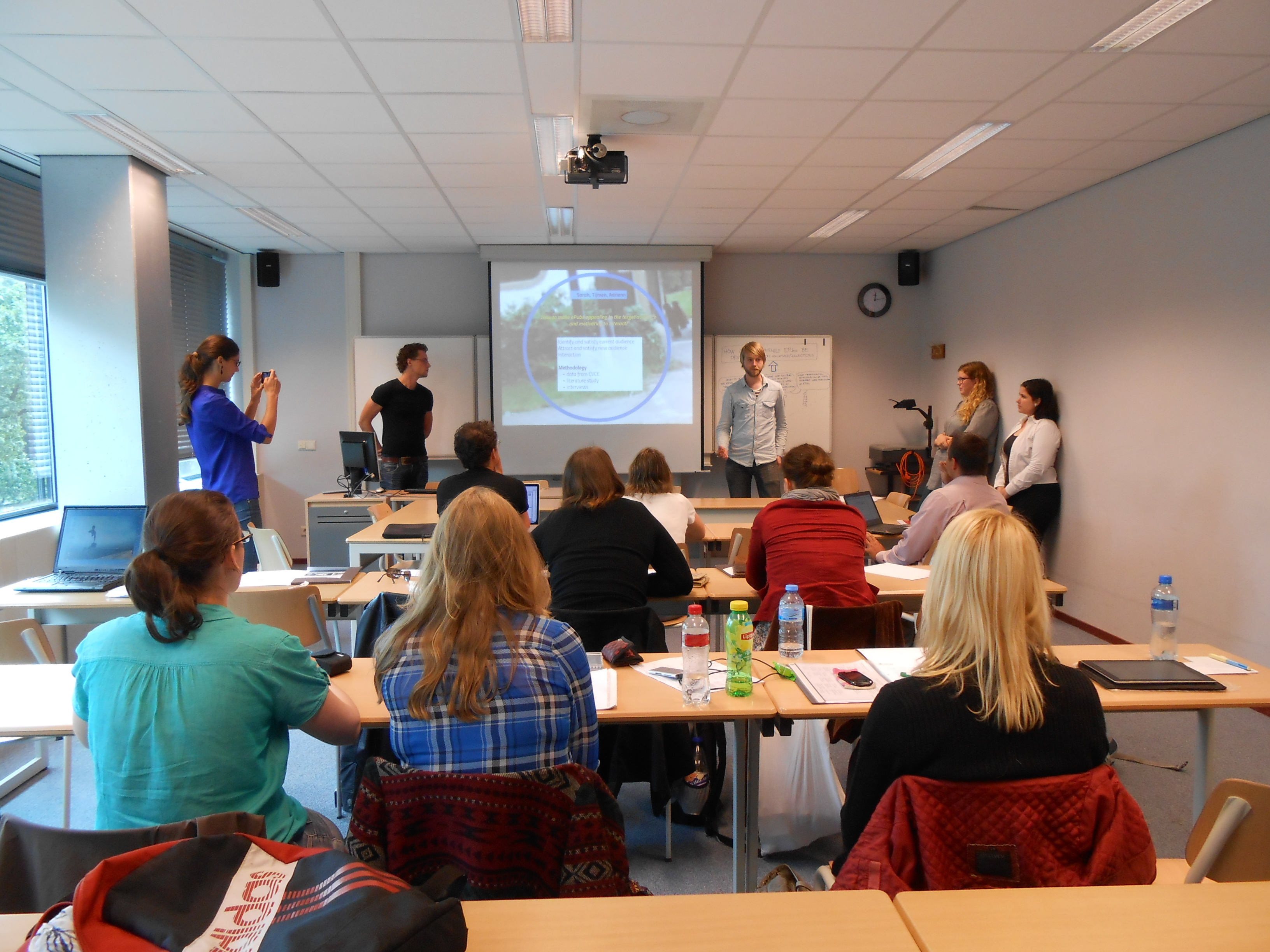
Friday morning we had another lecture about databases by Suzan Verberne. She talked about a Rembrandt database called Rembrandt Documents Project (RemDoc). We were shown how important it is to make a clear and user-friendly search engine and what features are important in the case of a database dealing with documents. In the early afternoon we made the last preparations for our presentation about our research plan, working plans and deadlines, and about the next steps we had to take. The feedback we received from our supervisors was overall positive and they seemed to be content with the plan we came up with.
You can find more information about the programme here.